

***Official state freshwater fish
Intro
As the New York State freshwater fish, brook trout is native to many lakes, rivers and streams. However, overfishing and habitat loss have contributed to their decline. This has led to the State stocking lakes and streams in order to help maintain fish populations. Within New York, there are only a small select population of “genetically distinct brook trout” that have not been influenced by stocking; .these fish are known as “heritage strain brook trout”.
Distinctive Traits
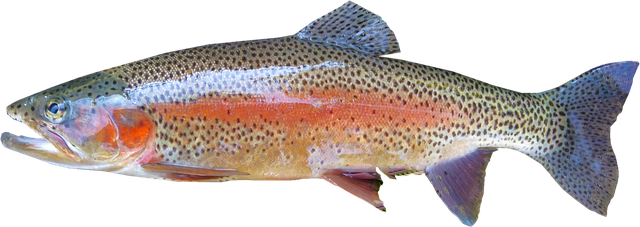
According to the Finger Lakes Land Trust, Brook Trout “have distinctive coloring on their sides, showcasing vivid red or orange spots surrounded by blue rings. Their bellies are pale in the spring, deepening to an intense red during fall spawning (especially among males), with lower fins like pennants with bold swaths of white, black, and orange. All this bright color stands in contrast against their dark olive-brown backs. Here, a close look reveals a maze of irregular yet tidy lines called vermiculations. It doesn’t take too much imagination to discern a likeness between these markings and a map of their waterways, etched into a green landscape.”
Habitat
Brook Trout require cold, clean water to thrive. During winter they they wait in deep quiet pools in a state of reduced metabolic activity. In spring they move to sun-warmed waters nearer the surface in search of prey. During spawning they like headwater streams with clean, relatively silt-free gravel beds, as well as submerged boulders, fallen timber, and undercut banks for shelter and concealment. Under suitable water conditions, brook trout also live in secluded ponds and lakes.
Diet
Brook trout have a broad diet. They eat mostly aquatic insects and larvae, as well as smaller fish, crustaceans, and even sometimes frogs and small rodents.
Size
The maximum size of a brook trout is generally around 14.5 pounds and up to 34 inches, with the official world record being 14.5 pounds from 1915. While most wild brook trout in streams are 6–15 inches, exceptional “coaster” or lake-dwelling specimens in the Great Lakes region can exceed 24 inches and 5 pounds.
Lifespan
On average, a brook trout lives two to three years. Established populations of brook trout are not generally considered threatened. Floods and droughts are likely the main causes of population changes for brook trout. Overharvesting can also presents a threat to populations of this fish.
Range and habitat
Although once native to a wide area of Eastern North America, they are increasingly being confined to higher elevations from the Appalachian Mountains to northern Georgia, northwest South Carolina, Canada– from the Hudson Bay basin east, the Great Lakes–Saint Lawrence system, the Canadian maritime provinces, and the upper Mississippi River drainage as far west as eastern Iowa.
Websites
- Wikipedia – Brook Trout
- National Wildlife Federation – Brook Trout
- Fish and Wildlife Service (.gov)
- Mainspring Conservation Trust
- Eastern Brook Trout Joint Venture
- Brook Trout (Salvelinus fontinalis) – Species Profile
- iNaturalist – Brook Trout (Salvelinus fontinalis)
- A Closer Look: Brook Trout
- New plan outlines conservation for New York’s brook trout
- Adirondack Brook Trout Pond Management – NYSDEC
- Where to find Brook Trout
- In Search of the Cold-Loving Trout
- DEC Species Spotlight: Brook Trout – Adirondack Almanack
- Brook Trout: Preserving New York’s State Fish
Videos